Listening to the Amazon rainforest, with Wiña
By Jane Fonda

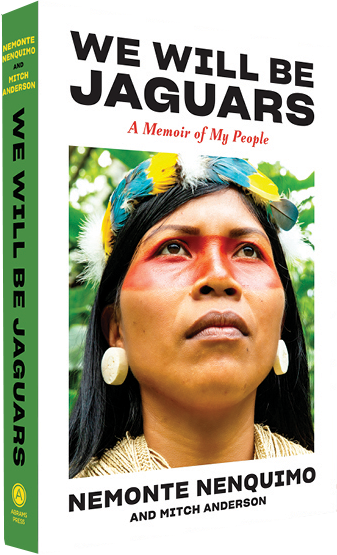
I’d never been in a rainforest before, but after reading the book, We Will Be Jaguars by Nemonte Nenquimo—an Indigenous woman leader of the forest-dwelling Waorani Nation in Ecuador—I asked her to invite me. I wanted to experience the Amazon and learn how I can help protect it.
I learned that the forests are not “a land with no people, for a people with no land,” as the Ecuadorian government claims. They’ve been home to Indigenous peoples, the forest guardians, for millennia.
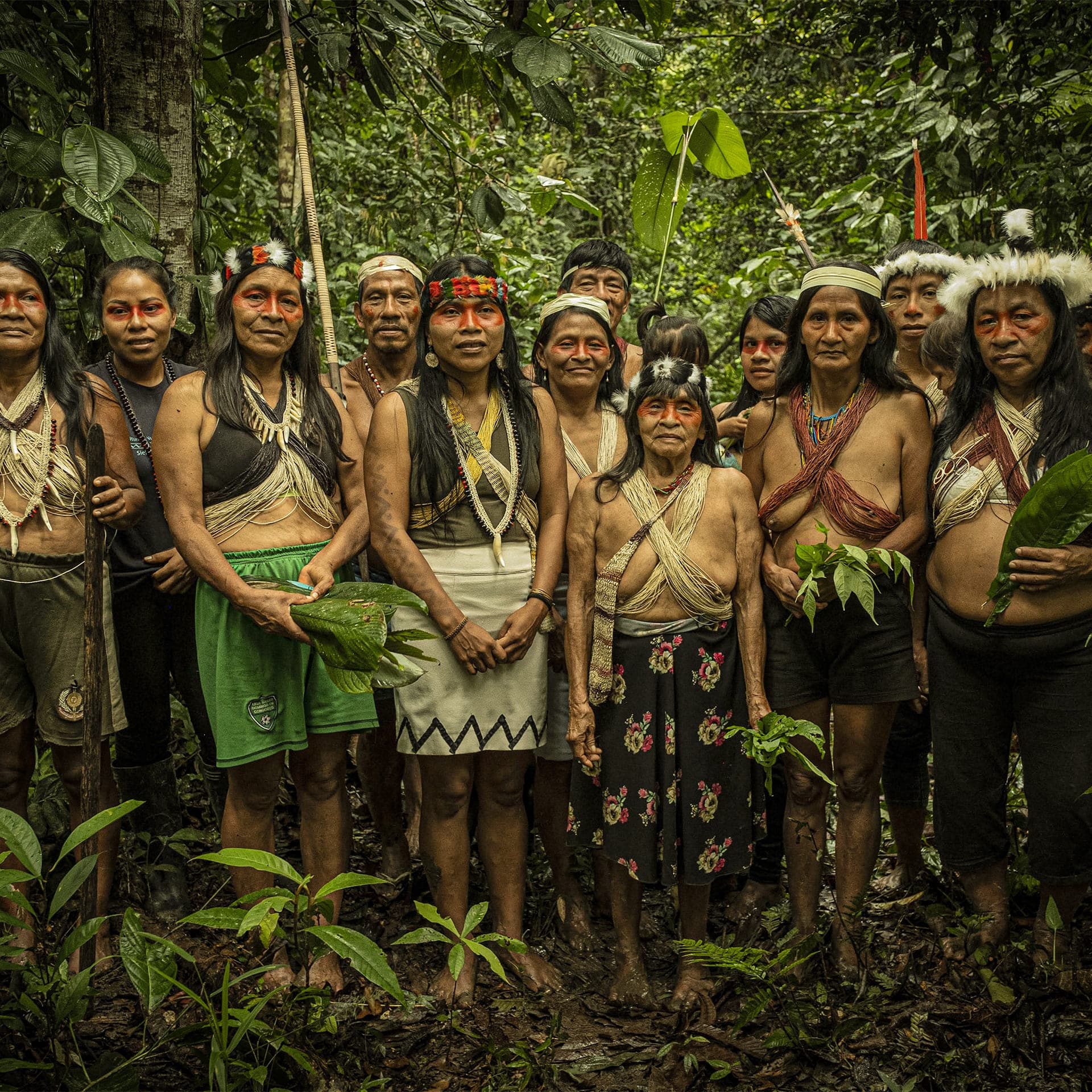
What I did not anticipate was that on my first canoe trip down the Napo River into the Amazon rainforest, Nemonte sat me next to an elderly Waorani woman named Wiña. She was tiny and very quiet, but her eyes sparkled with curiosity and humor, so I took her hand. As she seemed pleased by my gesture of friendship, I asked if she spoke Spanish. A translator explained that Wiña spoke only Wao Tededo, her oral ancestral language. Wiña explained that too many Indigenous nations have lost their language, and so the Ceibo Alliance, the Indigenous organization that she is a part of, is training teachers in Wao Tededo. “If we lose our language, we lose our strength, our power. It is our identity,” shared Wiña.

I felt a bond with this tiny woman who, Nemonte guesses, is my age, 88. When we arrived at where we would spend the night and disembarked, Wiña ground the red seeds of a fruit between her fingers and painted dots all over my face, as if to initiate me into her world.

I was with Wiña for three days as we moved deeper into the rainforest. I could feel her focused attention on her surroundings. She was listening to the trees, the plants, the water. At one point, she asked (via the interpreter) if I could hear the Howler monkeys. All I heard was a slight breeze. Turns out, that’s the monkeys.
She showed me a vine that cures toothache; a leaf that reduces fevers; and another one to reduce inflammation; she saw and heard everything, even a tiny (and dangerous) frog hidden beneath the fallen leaves on the edge of the trail – a frog so poisonous, according to Wiña, that it contained enough poison to “kill all of us!”
Walking in the forest, Wiña sang a repetitive, high-frequency chant unlike anything I’ve ever heard. The forest became a high-vaulted cathedral, complete with slanted beams of light. She knew where the macaws go to drink; where the parakeets go for salt; where the anaconda dwells, and what plants are poisonous…and a whole lot more.
Her close-knit community lives in interdependence not only with the tangible, natural world that provides all their needs, but also with the unseen, the spirits of the forest, Onawoka and their ancestors who guide them in their dreams.
Here I am, I thought, with people living seamlessly with the natural world, their source of life. But my country and hers view their life source as a ‘resource’ to mine, drill, and cut down for monocrops and cattle.

Now, it’s the Ecuadorian government that wants to auction off 8.7 million acres of ancient rainforest in the south-central part of Ecuador. The seven Indigenous nations whose ancestral land it is demand “free, prior and informed consent” before their land is ravaged. Wiña and the Waorani want to help stop it.
I can see the determination on Wiña’s face, and I feel it too. Too many children have died from oil pollution. Too much cancer. Undrinkable water. Animals dying. Climate worsening.
When the time came to say goodbye, it hit me: we’re two brave, old grandmothers from two diametrically opposed cultures, but we share the same fight.
Fonda joins Indigenous-led effort to protect the Amazon amid rising threats from oil expansion
Lago Agrio, Ecuador — Amazon Frontlines is honored to announce that acclaimed actor, lifelong activist, and Academy Award-winning actor Jane Fonda has joined the organization as an Honorary Board Member—marking a powerful new chapter in the global movement to defend the Amazon rainforest and the Indigenous peoples who have safeguarded it for generations.
Fonda’s decision follows a recent visit to the Ecuadorian Amazon, where she met with Indigenous leaders resisting oil drilling, mining, and deforestation. The experience deepened her commitment to amplifying their leadership at a critical moment for the planet.
“I have marched for peace, for justice, and now I stand with Indigenous Peoples for the Amazon,” said Fonda. “The Amazon is not for sale—not to oil companies, not to miners, not to loggers. It is the beating heart of the planet, and defending it is the responsibility of us all.”
Scientists warn the Amazon is approaching a tipping point: if 20–25% of the forest is destroyed, it could collapse into a dry savannah, releasing catastrophic levels of carbon and accelerating global climate breakdown. More than 15% has already been lost.
The announcement comes amid intensifying global pressure to expand fossil fuel production. Following recent disruptions to global oil supply, governments and investors are increasingly turning to the Amazon as a new frontier for extraction—accelerating plans across the region. In Ecuador, proposed oil expansion overlaps with Indigenous territories across the southern Amazon, raising serious concerns about human rights, irreversible ecological harm, and the dismantling of constitutional safeguards. Indigenous leaders warn these decisions are moving forward without genuine consent, placing entire ways of life at risk.
“Jane’s commitment comes at a decisive moment for the Amazon and our climate,” said Mitch Anderson, Executive Director and co-founder of Amazon Frontlines. “For more than a decade, we have worked alongside Indigenous peoples to defend their lands and rights, and we have seen the power of alliances—when frontline leadership is matched with global solidarity. Jane brings not only her voice, but her deep integrity, her ability to mobilize millions, and her willingness to listen and act. That is exactly what this moment demands.”
For Indigenous leaders, her commitment reflects a growing global recognition that their struggle is inseparable from the future of the planet.
“Our fight in the Amazon is a fight for life—for our peoples, and for the Earth,” said Nemonte Nenquimo, co-founder of Amazon Frontlines and a leader of the Waorani Nation. “We are defending the forest not only for ourselves, but for all humanity. When allies like Jane stand with us, it shows the world that we are not alone, and that together, we can protect what remains and build a different future.”
Founded in 2014, Amazon Frontlines works in partnership with Indigenous nations across the Upper Amazon to secure land rights, defend human rights, and protect rainforest territories from industrial extraction. Together with its Indigenous partner, the Ceibo Alliance, it supports Indigenous-led strategies that combine organizing, territorial defense, legal advocacy, and technologies such as GPS mapping and drone surveillance. This work has contributed to major climate victories, including halting oil and mining projects threatening millions of acres of primary rainforest, advancing Indigenous sovereignty, and earning international recognition, such as the Hilton Humanitarian Prize, UN Equator Prize and the 2020 and 2022 Goldman Environmental Prize.
Indigenous territories remain the most effective barrier against deforestation and a proven climate solution—yet they face escalating threats from extractive industries. Fonda’s appointment reflects a broader push to build alliances across cultures and borders to confront the climate crisis.
“The science is clear—we cannot expand fossil fuel extraction and still have a livable future,” Fonda added. “What I saw in the Amazon changed me. The leadership of Indigenous peoples offers a path forward. Now it’s up to all of us to listen, to stand with them, and to act.”
Amazon Frontlines is calling on governments to uphold Indigenous rights, on financial institutions to divest from destructive industries, and on people around the world to take action—supporting frontline communities, amplifying their voices, and helping stop new oil expansion in the Amazon.
About Amazon Frontlines
Amazon Frontlines is a nonprofit organization that works alongside Indigenous peoples to defend their rights to land, life, and cultural survival in the Amazon rainforest. Through long-term partnerships, the organization supports Indigenous-led solutions to protect biodiversity, uphold human rights, and confront the climate crisis at its roots.
Contact
Raúl Estrada
raul.estrada@amazonfrontlines.org
PHOTO ESSAY
In the oil fields of the northern Ecuadorian Amazon, Indigenous storytellers are confronting the legacy of decades of extraction on their ancestral territories. Alex Lucitante, a young A’i Cofán leader and winner of the Goldman Prize 2022, introduces this photo essay following a recent gathering of 30 storytellers from ten Indigenous nations.
Their testimonies reflect a new generation rising on the frontlines: stories that document, expose, and mobilize, demanding justice and take action to stop a new oil auction threatening one of the most biodiverse regions on Earth.
We were born to defend the forest, not to watch it die!

By Alex Lucitante, A’i Kofán leader
As Indigenous youth working in community-led communications, we came together in the northern Ecuadorian Amazon to collectively remember—and bear witness to—the impacts of colonization and oil extraction on our territories.


For more than sixty years, oil extraction has brought violence and loss into our spaces, invading lands, harming families, and desecrating lands once sacred and full of life. Forests that have long sheltered, nourished and protected us and our elders are slowly dying. Lands cared for by ancestors and spirits have endured not only contamination, but the deep sorrow of losing their children.
Since the 1960s, oil exploitation has affected the populations of Sucumbíos, Orellana, and Napo in Ecuador, home to the Indigenous Cofán, Siekopai, Siona, Waorani, Kichwa, and Shuar peoples.


We came together because our peoples are joyful and resilient. We have learned not only to sustain ourselves, but to move forward and build solutions. We wanted Indigenous youth from across the Ecuadorian Amazon, to truly see, smell, and experience firsthand the reality of oil extraction in the north—and to carry this truth back to their communities, strengthening our unity and resistance against exploitation and extraction. Remembering always the words of our elders and guided by our spiritual strength, we walk a path of hope.

A study analyzing 50 years of oil spills in Ecuador documents severe risks to the environment, health, and food security: these include wildlife deaths and organ damage, contamination of the food chain through heavy metals bioaccumulation, soil and vegetation degradation caused by salinity, and the spread of pollutants through water systems. Affected communities show higher rates of cancer, birth defects, and psychological disorders linked to heavy metal exposure.


Of the 29.65 million acres (12 million hectares) of tropical rainforest that make up the Ecuadorian Amazon, 68% has been concessioned by the government to oil companies.
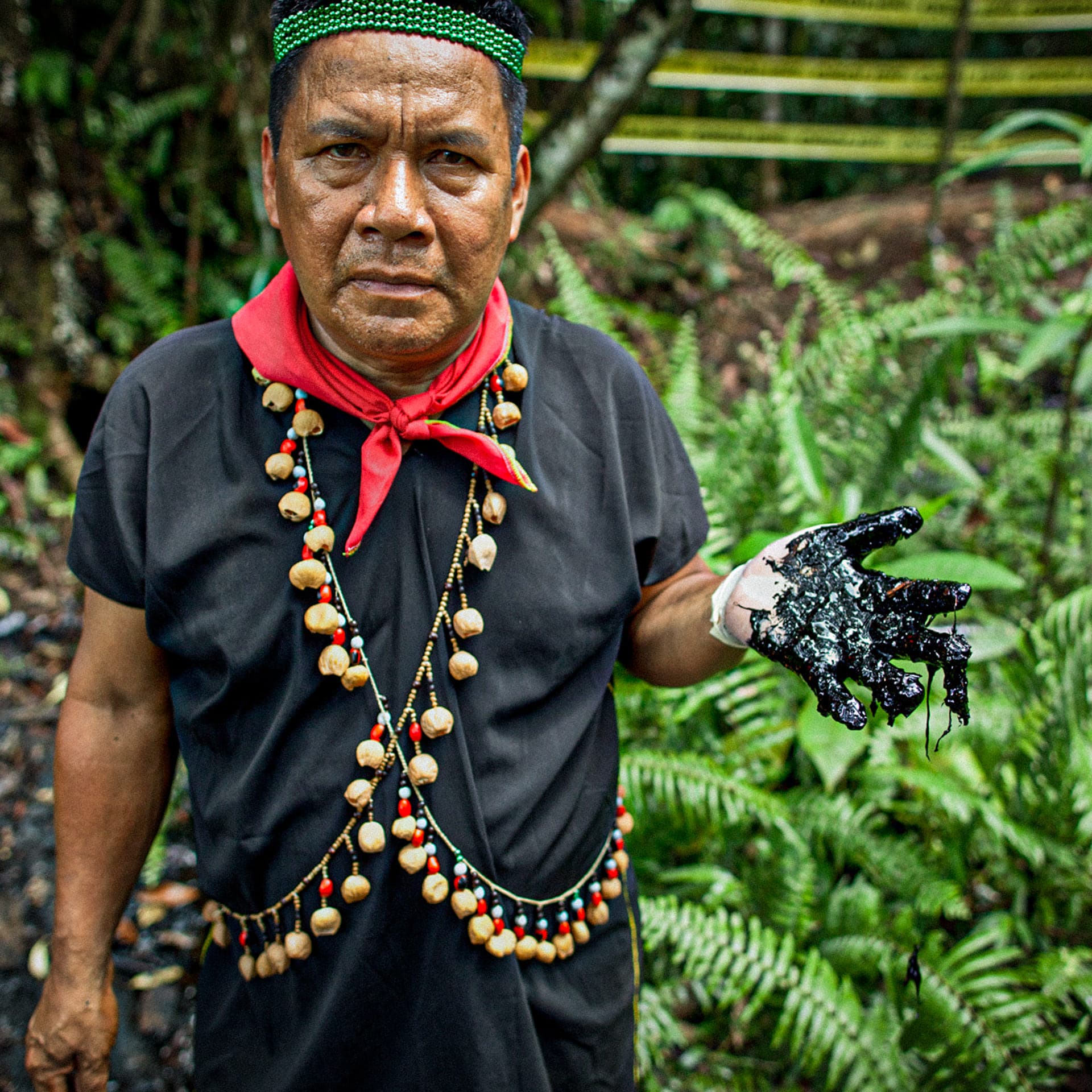
In 52 years, the Trans-Ecuadorian Oil Pipeline System (SOTE) pipeline has suffered at least 77 spills, releasing 742,041 barrels of crude oil into rivers, forests, and coastal areas.
One of the most devastating spills in recent history occurred between April 7 and 8, 2020, when the rupture of three pipelines released at least 15,800 barrels of crude oil into the Coca and Napo rivers. The spill affected 105 communities (120,000 people, including 27,000Kichwa) in Ecuador—and extended to Peru. As of 2026, legal action continues in defense of affected communities continues.


This experience in the north helped open the eyes of young people, allowing them to witness—even if only for a few days—what oil extraction truly means.
Now, as the Ecuadorian government once again moves to expand oil extraction into our territories defending our shared home is more urgent than ever. Raising our voices is no longer a choice; it is a necessity to show the world what is happening in our territories—realities that too often go unseen.
Through our words, our images, and our ways of understanding the world, communication becomes a tool of defense: a means to denounce injustice, preserve memory, and resist those who seek to impose themselves upon us.

In August 2025, the Ecuadorian government announced a bidding plan for 49 oil projects, with projected investments of more than $47 billion. Eighteen of these oil blocks threaten nearly 30 million hectares of rainforest—territories of seven Indigenous nations that have never before faced been subjected to extraction.
Credits.
Photos by William Kano and Ezequiel Mojo. | Text by Alex Lucitante | Edited by Sophie Pinchetti and Raúl Estrada | Coordinated by Nico Kingman and Jerónimo Zúñiga.
Water as a sacred space: Illustrated stories from the Amazon
Illustration Shen Aguinda
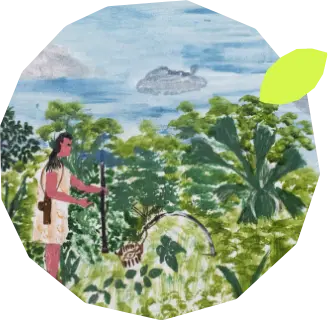
In the Amazonian Indigenous cosmovision, water is more than a river, a lagoon, or a stream. It is a place where spiritual beings, like guardians and mermaids, line. Where fish are planted; where a woman who transformed into an anaconda resides; it is a place visited by elders and wise people through medicine.
Indigenous leaders, both women and men alike, from the Siona, Siekopai, A’i Cofán, and Waorani nationalities of the Ecuadorian Amazon, share stories they learned from their grandparents about their relationship with water.
Illustrator Shen Aguinda (A’i Cofán) interpreted these stories through drawings to commemorate World Water Day.

Wilmer Piaguaje, Siekopai, remembers Okome and Waisa ’same Nomio, owners of the water, who sow the fish in the rivers.
Transcription
Waisa’same Nomio, the woman, and Okome, the man, are the owners of the water; they control the seasons and sow fish in all the rivers..
The husband guides the fish during the rising waters in August. The woman accompanies them when the rains arrive: March, April, May, and June. These are the times when the fish spawn. They call it “sowing maize.” We say they spawn—meaning they lay their eggs—but for them, it is not that; for them, it is sowing maize..
They are not large beings like us; they are small. The woman has long hair and ornaments on her arms; she carries small, very fragrant plants. In Paikoka, this is a seû. The man is also small. Both dress in white and do not paint themselves with achiote..
Waisa’same Nomio has little fish hanging from the edges of her skirt as ornaments. On his necklaces, Okome has tiny fish. I know all of this because my grandmother and my grandfather told us these stories during the nights of yagé ceremonies. We would ask them questions. It was something very beautiful..


Emergildo Criollo, A’i Cofán nos cuenta cómo el agua puede abrirse como una casa donde los chamanes encuentran boas y sirenas.
Transcription
Shamans are experts at entering the water because, for them, the water is not water—it is a house.
When they take yagé, they don’t see water; they see a door to enter because inside they find the boas and the sirens.
They, the sirens, have no men; they are only women. They want nothing to do with human women who walk near the creek where they live when they have their period. If the siren manages to catch the scent of one of them, she will pursue her until she kills her. They also hunt women carrying newborn babies. The siren arrives suddenly and grabs her victim by the neck, breaks it, and they die right then and there! Just like that, in a heartbeat.
The boa is also not a boa to the shamans. We cannot see where they live; we think they live on the land and go from there to the water, but the shamans say they are actually beings of the water. Some boas are shamans. There are good shaman-boas and bad ones.
It is said that the bad shaman-boa sets its trap near where animals and people pass, so they get entangled and then get dragged into the river. If a Cofán is not a shaman, they die as soon as they enter the water. That is why the boas wrap around them and drag them by sheer strength into the water, as if they were swallowing them.

Jairo Irumenga, Waorani, remembers the story of the son of the sun and how nature punished him with thunder and lightning.
Transcription
The Waorani say that sometimes nature grows angry when the son of the sun arrives, because once a grandfather took the life of his own grandson.
It all happened in the jungle, on a day like any other. The little boy loved to play, but his grandparents took him to the chacra and began felling the trees. The boy wouldn’t help them; he only wanted to play. Then, the grandfather grew very angry and killed him!
The next day, he returned to the chacra and realized what he had done. He was filled with regret; if he hadn’t killed his grandson, the boy would be there, helping him. Suddenly, he heard a child playing on a nearby beach. He peeked from a hiding place and saw the boy on the shore, walking back and forth, throwing stones and shouting.
Suddenly, the grandfather realized: “That is my grandson. I have to get my grandson back!” He approached, trying to stay hidden the whole time; he crept closer and closer, until he grabbed him! It was his grandson, the very one he himself had killed the day before. At the exact moment he caught him, nature responded with thunder and lightning, and the grandfather began to scream: “No, Waengongi (god), do not destroy me, I am recovering my grandson! I am not killing anyone, I am recovering my grandson!”
Despite his cries, it rained hard, so very hard. The Waorani say it rained so much that the water put out all the fires that lit and warmed their homes. The punishment for the death of that child was to extinguish all fire with water.


Alicia Salazar, Siona, tells us about the anaconda, the mother of the fish that inhabit the river.
Transcription
Inside the rivers, there are spirits that cannot be seen with the naked eye, but we can see them when we take the sacred plant. They reveal themselves to us through dreams and through our spirituality. Our wise ones would transform into anacondas and set out to travel along the river during their ceremonies, wouldn’t they? The anaconda is like the mother who watches over all the food, the fish.
Now, with everything we are going through—all this climate change—these spirits are leaving; they are disappearing. And our rivers, well, they are drying up because of all the pollution and all the noise. They also need to be in a place of tranquillity. It is not just water, rivers, and lakes; there are many spirits there who help us in our daily lives, in the way Indigenous peoples live together within their territories.
Credits
Text and interviews: Michelle Gachet
Editing: Erika Castillo, Omar T. Bobadilla
Illustrations: Shen Aguinda
Photos: Ezequiel Mojo, Michelle Gachet, William Kano
Web Design: Mónica Aranda
Translation: Alejandra Pérez
With 77 votes in favor and 70 against, the National Assembly of Ecuador approved the Organic Law for the Strengthening of the Strategic Mining and Energy Sectors on February 26, 2026.
The new legislation removes key environmental licensing requirements for mining projects. Critics warn that this weakens protections for ecosystems and Indigenous peoples by reducing environmental, social, and cultural safeguards in order to accelerate investment and advance Ecuador’s economic agenda, including commitments linked to agreements with the International Monetary Fund.
Why mining expansion in the Amazon matters
The Amazon rainforest is one of the most biodiverse regions on Earth and plays a critical role in regulating the global climate. Industrial and illegal gold mining in the region has already caused widespread deforestation, river contamination, and mercury pollution. Mercury — used to separate gold from sediment — contaminates waterways, accumulates in fish, and poses serious health risks to Indigenous and riverine communities.
Mining expansion also fragments intact forests, threatens wildlife, and opens remote territories to roads, logging, and illegal land grabbing. In many parts of the Amazon, mining corridors have become entry points for organized crime networks involved in illegal activities including gold trading. Because many proposed concessions overlap with Indigenous territories, mining projects often bring social conflict, violence, and pressures that undermine traditional governance systems and ways of life.
Concerns about rights and legal protections
Indigenous organizations warn that the law weakens constitutional protections and breaches Ecuador’s international commitments by reducing environmental oversight and undermining Indigenous peoples’ right to decide what happens on their ancestral territories.
Ecuador’s 2008 Constitution — globally recognized for granting legal rights to Nature — guarantees Indigenous peoples the right to free, prior, and informed consent, as well as the constitutional right to resistance when fundamental rights are at risk. The bill also conflicts with landmark rulings such as the 2022 Sinangoe decision and with international agreements including the Escazú Agreement and the Kunming-Montreal Global Biodiversity Framework.
On February 24, in a statement signed in the Amazonian city of Puyo, the seven Indigenous nations of Pastaza — Achuar, Andwa, Kichwa, Shuar, Shiwiar, Sápara, and Waorani — rejected the bill and demanded that it be shelved. These nations have long defended their territories, which remain among the most intact forests in Ecuador and are essential for biodiversity conservation and climate stability.
In 2025, Amazon Frontlines warned that IMF-backed reforms and efficiency measures could come at the cost of fundamental rights and environmental protections. The organization noted that the elimination of the Ministry of Environment, Water and Ecological Transition (MAATE) — and the transfer of its responsibilities to institutions tasked with promoting extractive industries such as mining and oil — effectively placed environmental oversight in the hands of the very sectors meant to be regulated.
Since the start of his presidential term, the government of Daniel Noboa has fast-tracked regulatory changes to advance its economic agenda with few constraints, in line with the International Monetary Fund-supported financial program. This alignment was reflected in the second review of Ecuador’s agreement with the Fund, published on July 18, 2025, in which the country committed to fiscal and structural reforms designed to attract private investment to “high-potential” sectors such as mining, hydrocarbons, and energy, while also promoting domestic capital market development and strengthening the financial system.
Mining and hydrocarbon concessions in Ecuador frequently overlap with Indigenous territories and some of the country’s best-preserved forests. For decades, Indigenous communities have demanded that their constitutional rights be upheld, including protections enshrined in the 2008 Constitution, which made Ecuador a global reference point by recognizing Nature as a subject of rights.
In the fourth review of Ecuador’s current agreement, dated December 18, 2025, the International Monetary Fund acknowledged the country’s efforts to “promote investment and growth in the mining sector,” noting that authorities committed to issuing regulations to reopen the mining cadastre by late June 2026, after its closure in 2018. The report also states that a new fiscal regime for the mining sector is being developed with technical assistance from the IMF.
By dismantling environmental safeguards and transferring oversight responsibilities to extractive-sector institutions, the new law deepens tensions between Ecuador’s economic development model and the protection of human rights, biodiversity, and the global climate.
This article was originally published in Spanish by Mongabay.
- In the A’i Cofán community of Sinangoe, the Indigenous Guard’s youth learning initiative, known as Chipiri Kuirasunde’khu — Little Defenders of the Forest — was established.
- The guard is made up of 47 children between the ages of three and fifteen and seeks to revitalize their mother tongue and cultural practices through direct contact with their territory.
- The initiative also aims to nurture future leaders who will protect the 64,000 hectares of Amazon rainforest from threats such as illegal mining and unconsulted concessions.
- It is part of a community-led education model — an approach grounded in a constitutional right that has yet to be officially recognized — and was conceived by a 12-year-old girl who now coordinates the initiative.
A 15-minute walk from the Sinangoe community center in the Ecuadorian Amazon lies the Segueyo River. Emerald in color and calm in its flow, it runs quietly past the forest. Along its banks, about 50 children from the Indigenous children’s guard Chipiri Kuirasunde’khu sat around a fire listening to stories.
“That’s what remains of the fish tree,” says 12-year-old Melany Guaramag. She is referring to a myth that recounts the origin of the A’i Cofán people and the abundance of fish that once filled these waters. Melany is the coordinator of the Chipiri Kuirasunde’khu — a name in A’ingae that means “Little Guardians of the Forest.”
Elder Graciela Quenamá told the story in her mother tongue. “Grandparents carry the responsibility of teaching where our roots come from, so that children grow up knowing we must remain A’i Cofán,” explains Érika Narváez, a member of the community’s adult guard who coordinates the children’s guard activities.

Guaramag had occasionally accompanied the adult Indigenous guard when she proposed creating a group for boys and girls. She spoke with Alexandra Narváez — recognized for receiving the Goldman Environmental Prize in 2022 — who had initially faced resistance from her own community when she sought to become the first woman to serve as a guardian of their territory.
“I told her we could create another group — a youth learning initiative,” the girl recalls. This time, the idea was warmly received by the community from the outset. A territorial assessment had revealed that the culture and language were being lost, along with the knowledge that has enabled them to conserve nearly 64,000 hectares of Amazon rainforest. After discussions in the community assembly, a consensus was reached for the adult guard to lead the process.
They designed the methodology, and parents approved it. “On February 7, 2025, we began walking with the Chipiri,” Alexandra Narváez recounts. “We walked through the territory, played, and listened to the elders’ stories around a fire — it was a very beautiful first gathering,” she adds.

The creation of the Indigenous Guard’s youth initiative is closely tied to Sinangoe’s community-led education project. “We want education to extend beyond four walls, as established by the Ministry,” says Wider Guaramag, president of the community. For the A’i Cofán, he explains, learning must take place throughout the territory and follow their own pedagogy — learning by doing, through lived experience.
Language: A Tool for Keeping Culture Alive
For the camp in Segueyo, the children requested tents and hammocks from the adult guard. They packed food into their backpacks and pulled on their rubber boots. At four in the morning, they gathered at the medicine house, where the elders prepared yokó, a natural energizing drink. “As we drink it, we reflect on what we are going to do, what we might encounter in the forest, whether there will be dangers or not,” explains Érika Narváez.
They set out for Segueyo in the afternoon. Upon arrival, they cooled off in the river and pitched their tents. Together they prepared the meal and ate as the elders shared stories.

The next day, they woke at dawn and began with exercise. Afterwards, they walked through the forest in search of medicinal plants. Melany’s group found yokó, the plant whose root is ritually prepared and consumed at daybreak. “We saw how it’s cut, how it’s harvested, and how to tell when it’s ready,” she explains.
The group is made up of 47 children between the ages of three and fifteen. They are divided into three age groups: three to seven, eight to eleven, and twelve to fifteen. Members of the adult guard, community elders, and some parents support them during these activities.
“This year, as we’ve been teaching, the children have already begun speaking the language again, because it was being lost,” says Érika Narváez. Grandmother Graciela does not speak Spanish, so children who want to talk with her and listen to her stories must learn their language. In the meantime, Narváez serves as interpreter.

“I speak a few words with my father at home, but I don’t understand very well,” Melany Guaramag admits. Still, she doesn’t get discouraged. “Sometimes the stories are told in A’ingae, and I understand more or less. If I don’t, I ask my classmates to translate for me,” she says.
Speaking their mother tongue is essential to understanding their culture, ancestral knowledge, and territory, according to Érika Narváez. “We teach children to build a connection with the territory and to protect it. It is possible for them to learn how to keep it alive — because if it disappears, we will no longer be A’i Cofán,” she explains.
Elders as the Foundation of Education
The assessment also found that younger generations were losing cultural practices related to food sovereignty and health, says Patricia Peñaherrera, the Education Program Lead at Amazon Frontlines and technical advisor to Sinangoe. For her, institutionalized education separates Indigenous peoples from their families, their territory, and their community.

When reviewing the national curriculum framework — particularly the Intercultural Bilingual Education System Model (MOSEIB) — members of Sinangoe identified themes that did not align with their reality. “It’s very Andean and not in tune with our Amazon,” says Wider Guaramag. For example, educational materials included texts and images of medicinal plants from the highlands, rather than encouraging students to learn about their own environment.
In response, they worked to develop their own curriculum proposal. “In terms of themes and content, priority has been given to the territory, to the elders’ work in caring for nature, and to the community’s historical process of struggle and resistance,” explains Peñaherrera. They also incorporated topics related to local ecosystems and biodiversity.
The people of Sinangoe are river people, and caring for the water is deeply important to them, so an entire chapter is devoted to it, she adds. It explores the origin of water from the A’i Cofán worldview, while also addressing scientific knowledge, such as the chemical structure of water.

Now, elders visit the school to teach skills such as weaving baskets and cast nets — objects central to their culture. Wider Guaramag explains that these activities help integrate different forms of knowledge.
To weave a basket, lessons begin with natural sciences and strengthen the connection to the territory by reflecting on — and even seeking out — the origin of the plant fibers. As children learn to weave, the elders share related myths and legends, covering social studies. Mathematical knowledge is also incorporated, as students recognize geometric patterns within the weaving.
Another change involved language. Although the MOSEIB includes a subject dedicated to the mother tongue, members of Sinangoe believe A’ingae should run through the entire learning process and be present in all subjects. “It is about safeguarding the cultural identity of the territory,” says Guaramag.
A March for Self-Determined Education

Members of the community, along with representatives of the Waorani of Pastaza and the Siekopai peoples, marched in Quito on January 20 to demand that the Ministry of Education formally register their community-led education projects. Although this is a constitutional right, it has yet to receive official recognition.
Later that afternoon, the delegations met with José Luis Torres, Vice Minister of Education; José Atupaña, Secretary of Intercultural Bilingual Education and Ethnoeducation; and Ángela Tipán, General Undersecretary of the Office of the Vice President of the Republic.
Leaders from the three Indigenous nations presented the projects already being implemented in their territories. The authorities committed to reviewing the proposals, providing feedback, and developing a roadmap toward formal registration. A follow-up meeting with technical teams is tentatively scheduled for February 24.

“We have been very careful with this process. That is why we developed it alongside our technical team, and we hope there will be no obstacles,” says Guaramag. The project has been implemented in Sinangoe for one year and has been in development for two. The Waorani have been implementing their model for six years, and the Siekopai for nearly three.
Sinangoe, however, has not had positive experiences with the Ministry of Education. In 2018, regressive erosion from the Aguarico River caused the school to collapse. Since then, children have attended classes in storage buildings, a communal house, and a space built by the community. In 2024, a court ordered the State to present, within 60 days, a timeline for rebuilding the school, but authorities reportedly acknowledged they lacked funds for the project, according to Guaramag.
Caring for the Territory: A Responsibility Shared by Even the Youngest
Alongside the development of their own curriculum, Sinangoe created a community-led education project. “We need to return to living as A’i Cofán,” says the community president. Since colonization and evangelization, traditional practices have been replaced by Western customs.

For example, he says, elders want to strengthen young people’s connection to the territory so they do not fall into illegal mining networks — an activity threatening the community — nor become divided by promises of economic benefits from unconsulted mining concessions, as has already happened in other Indigenous communities.
“If we fail to raise these children to be strong in this sense today, we will lose our territory, we will lose our rights, we will lose practically everything,” Guaramag affirms.
The community-led education project and the Chipiri Kuirasunde’khu guard form the foundations the people of Sinangoe are working to strengthen for future generations. “Caring for the territory’s shared resources has increasingly become a responsibility for everyone — not just a specialized body that conducts patrols,” says Peñaherrera.
Indeed, the children’s guard aims to raise boys and girls who know the forest and their culture, who have a voice of their own, and who grow into future leaders.

Joining the adult guard — the group responsible for keeping environmental threats at bay and which has already won a legal ruling against unconsulted concessions affecting Sinangoe — is voluntary, the community president explains. Once young people turn 15, they may decide whether to join this collective of men, women, youth, and elders.
Being part of the Indigenous Guard youth initiative has inspired Melany to continue learning about the forest and the rivers her ancestors have depended on. “It has given me an even stronger desire to care for my territory, because it is life; we have plants, medicine, fruits, animals, fish, clean water, oxygen — we have everything,” she says.
Main photo: Children who are part of the Indigenous guard youth learning initiative participate in a drone training exercise, a technology used by the Sinangoe A’i Cofán Indigenous guard to monitor threats to their territory. Photo: Courtesy of Morelia Mendúa / Alianza Ceibo.

Indigenous Education Is Shaping the Future of the Amazon

Learning from the land in order to protect it — and protecting it in order to continue living — this cycle lies at the heart of the community-led education created by three Indigenous nations of the Ecuadorian Amazon. More than a model of schooling, it is an act of resistance: a way to defend the rainforest and to sustain cultures that refuse to be erased.
Surrounded by the cold facades of city buildings, children dressed in the vibrant clothing of their cultures — faces painted, crowns upon their heads — walked through the streets of Quito alongside their parents on January 20, 2026. They marched to call on Ecuador’s Ministry of Education, Sports, and Culture to formally recognize the Community Educational Projects (PEC), so these initiatives can continue to be carried out in their territories without obstruction.
In this photo essay, we invite you to walk alongside Waorani, A’i Cofán, and Siekopai children as they forge a path toward an education of their own — one that safeguards their future as Indigenous peoples and helps protect their territories in the Amazon Rainforest.

Preparation: Before heading to the gathering point, a young A’i Cofán woman has her face painted with traditional sun symbols.

In his hotel room, Davixon Lucitante — a young Siekopai — adjusts one of his bracelets. He proudly wears the adornments of his culture: a crown, face paint, necklaces made of seeds and animal teeth, and the ma’ña tied around his arms. A feather through his nose marks his recognition as a knowledge holder. He is an heir to his grandfather’s wisdom, involved in the cultural revitalization of his people and learning the path of a future elder.


Boys and girls gather at the meeting point on the platform outside Ecuador’s Ministry of Agriculture, catching the first rays of the morning sun. They carry woven crafts, spears, and hand-painted signs bearing their messages and demands to Ecuador’s Ministry of Education.
On their way to the Ministry of Education, children from the three Indigenous nations walked hand in hand with their parents, grandparents, teachers, and community leaders to deliver their Community Educational Projects.


Since 2020, Waorani communities in the province of Pastaza, the Siekopai Nation, and the A’i Cofán community of Sinangoe have worked tirelessly to create an educational model rooted in their own worldview and the ancestral knowledge that has sustained and protected the rainforest for millennia. These initiatives do not reject Western knowledge; instead, they weave it in through innovative teaching methods that allow students to engage with these subjects through their own cultural practices.


By 2025, the Community Educational Projects (PEC) were underway in nine schools, reaching 280 children and young people across the three territories. In Waorani territory alone, six community schools were built to support the new learning methods, serving 140 students between the ages of 3 and 19. At the same time, 29 Indigenous educators from the three nations — Waorani, A’i Cofán, and Siekopai — were trained to lead and sustain the projects.

Outside Ecuador’s Ministry of Education in Quito, an A’i Cofán woman and man from Sinangoe — members of the Indigenous Guard — stand alongside the march. The Indigenous Guard participates in children’s education in Sinangoe, where learning includes how to defend their territory.

A’i Cofán elder Graciela Quenama speaks to the media in her language, A’ingae, about the teachings she shares with the children of the A’i Cofán community of Sinangoe:
“Our children are already weaving baskets. They are practicing our traditions. We do this so they do not lose their way or forget our culture and identity. We want to keep recovering all that our elders have taught us.”

Waorani elder and pikenani Omanca Enqueri spoke in Wao Tededo to demand that the Ministry of Education register the Community Educational Project, reaffirming the importance of an education rooted in her people’s autonomy and self determination:
“I am here with my grandchildren and my children. We have come from far away, from our rainforest territory, so they will hear us and register our projects. Our own education model is very important, and it must be respected.”

Mireya Piaguaje, an elder of the Siekopai Nation, sang in Paikoka as she marched toward the Ministry of Education. There, she proudly told the media about the work her people have been carrying out
“with the guidance of our elders, youth, and leaders, so that our own education can ensure our autonomy, strengthen our identity, and sustain our culture so we do not disappear.”

“Our territory, our knowledge, our connection to other worlds — that is what matters most. We are deeply concerned to see ancestral knowledge fading among children and even teachers. Under the Ministry of Education’s model, our elders are not allowed to take part in teaching. We believe our wise men and women must be part of education and the transmission of knowledge — not only lessons in reading, writing, and arithmetic.”
Wilmer Piaguaje, Education Leader of the Siekopai Nation

“We have come here to open a coordinated dialogue with the Ministry of Education. Our education system was built within our communities, guided by the wisdom of our elders, and the results have been very positive. We have launched six pilot schools and are already seeing change in our children, because this model grows from the roots — from the forest itself. Outsiders have always come to impose their systems. We are decolonizing education, and it is through education that self-governance begins.”
Oswando Nenquimo, President of the Waorani Organization of Pastaza

“Teaching is not confined to four classroom walls, as the Ministry defines it. It means learning through the territory itself. Every space, every corner of our land is a place to learn and to practice our own knowledge — knowledge that is at risk of being lost. The methods and ways of teaching passed down by our elders are already showing results.”
Wider Guaramag, President of the A’i Cofán Community of Sinangoe

At the end of the march, the proposals were formally received by the Secretariat of Intercultural Bilingual Education and Ethnoeducation (SEIBE), the Vice Ministry of Education, and the General Subsecretariat of Ecuador’s Vice Presidency. The institutions agreed to begin the official registration process for the Community Educational Projects (PEC) within one month — in February 2026 — once technical teams are formed to carry out the evaluation.

At the Latin American Faculty of Social Sciences (FLACSO), the Indigenous delegations took part in a public discussion that brought community-led education into an academic space. They offered a hands-on presentation of weaving, fishing nets, ceramics, medicinal plants, and the many forms of knowledge already being learned through their community-based education systems.
Amazon Frontlines is proud to support these processes and to work in partnership with the Waorani, A’i Cofán, and Siekopai nations, alongside Ceibo Alliance, in strengthening education systems that are vital for Indigenous autonomy, the future of the Amazon, and the global climate.
For almost ten years, Amazon Frontlines and the Ceibo Alliance have had the privilege of working alongside Indigenous Guards across multiple nations and communities in the Ecuadorian Amazon. The Kuirasundekhu of the A’i Cofán of Sinangoe, the Wajosar’a of the Siekopai Nation, the Andema kañasûndekhû of Cofán Bermejo, and the Nee Wanonani Meñebai of the Waorani of Pastaza are just a few of the many Indigenous Guards that have played an active role in our collective work.
Throughout this journey, we have witnessed and accompanied the profoundly human and community-driven process behind these Guards: the learning, the growth, and the strengthening of collective organization as Indigenous nations confront a growing wave of industrial interest and pressures seeking to exploit their ancestral territories.
In a moment when regressive narratives hold power over information, seeking to stigmatize Indigenous Guards and criminalize defenders of individual, collective, environmental, human and territorial rights, we want to recall five truths about Indigenous Guards that will allow you to understand their work and continue learning from those who defend the Amazon and everyday life.
1. It is an ancestral, community-based body for the defense of life and ancestral land.
Indigenous Guards are a community-led, ancestral, and legitimate body born from the living memory and organization of Indigenous peoples. Their principles are rooted in a profound connection to cultural values, cosmovision, spirituality, and the territories they have safeguarded and sustained through centuries of resistance. Their work protects their communities, collective rights, territory, culture, and life itself.
Indigenous Guards defend their territory, a territory they feel and listen to. They walk and monitor their territory using technology and, above all, the ancestral knowledge passed down by their elders. They are a fundamental part of community governance: they emerge from collective mandates, participate in assemblies, remain connected to the wisdom of their elders, and strengthen the social fabric that holds their nationalities together.

Photo: Karen Toro


2. There is no single Indigenous Guard: each community has its own, based on its needs and its own forms of organization.
Each Indigenous Guard reflects the history, cosmovision, and organization of its people; this is why they have different names and organizational structures. Although there is no single Indigenous Guard, they all share a common source of collective authority: community assemblies and the spirituality that guides their work. Their shared mission and principle is to protect life and territory through their right to self-determination.
Within this framework, their practices are defined: spiritual guidance and ancestral medicine, decisions made in assembly, the mandates that orient their work, and the symbols and attire that identify them. Each Indigenous Guard is, at its essence, a living expression of the history and political organization of its own indigenous community or nationality.

Photo: Morelia Mendúa / Ceibo Alliance


3. Their existence is upheld by the right to self-determination of Indigenous peoples
Indigenous Guards are a recognized mechanism with legal backing in both the Ecuadorian Constitution and jurisprudence, as well as in international human rights instruments. Its existence is legally recognized as part of the essential component of self-determination, self-governance, and the inherent legal systems of Indigenous peoples.
Likewise, they are recognized as a collective subject in the defense of human rights and the rights of nature. Their role is to protect life, territory, and identity, always guided by the community’s mandate.


Photo: Daris Payaguaje / Alianza Ceibo
4. The collective partnership of Amazon Frontlines, the Ceibo Alliance, and the Regional Indigenous Council of Cauca (CRIC) of Colombia
Since 2018, Amazon Frontlines and the Ceibo Alliance have been steadily accompanying the strengthening of Indigenous Guards in the Northern Amazon, through work built alongside Indigenous organizations and guided by their own ways of thinking, doing, and governing. This process emerged from the communities’ own needs in the face of increasing pressures and threats to their ancestral territories, and it has taken shape through workshops, community dialogues, and inter-community gatherings that have enabled the sharing of experiences in territorial protection.
This path of collaboration opened the door to partnerships with the Regional Indigenous Council of Cauca (CRIC) in Colombia and with organizational structures of the Indigenous movement in Ecuador, giving rise to the first National Gathering of the Indigenous Guard in 2022. Within this framework, Amazon Frontlines and the Ceibo Alliance helped form a multiethnic and interdisciplinary accompaniment team dedicated to training in rights, territorial monitoring, identity, and governance.
The accompaniment is carried out in a horizontal and itinerant way: sharing knowledge, strengthening capacities, exchanging skills and understanding around rights and territorial and cultural defense, systematizing customary norms, and supporting holistic territorial protection practices. This work responds to mandates issued by the communities themselves and is coordinated with their governing councils.
Our role in accompanying the Indigenous Guards is grounded in respect for their autonomy and in walking alongside their peoples, children, youth, elders, and authorities. Our commitment is to be present, supporting them to strengthen, through transparency and collective work, their right to defend life and their ancestral lands.

5. The fundamental role of Indigenous Guards today
Indigenous Guards are an indispensable mechanism in the face of the current threats facing territories and communities. The expansion of colonization and extractive industries—mining, oil, logging, and agro-industry—and the structural absence of the State in rural and border areas pose significant risks to the integrity and physical and cultural survival of indigenous peoples. Violence associated with territorial disputes, the presence of armed actors, drug trafficking, stigmatization, criminalization, and violence against social leaders and human rights defenders, as well as the consequences of the climate, economic, and social crises, make community protection and defense essential.
Indigenous Guards monitor, protect, and defend territories, documenting and preventing threats that the state system is unable to manage effectively. Their existence and continuity are a legitimate expression of self-determination and the exercise of collective rights.
Guaranteeing the exercise of Indigenous Guards is part of Ecuador’s recognition as a plurinational and intercultural state and means protecting life itself from external pressures and structural violence in the region. It also constitutes an act of resistance and historical, cultural, and political memory in the face of a monocultural, colonial, and capitalist system that erodes the identity and life of indigenous peoples.


This article was originally published in Spanish by Mongabay.
Key points:
- Indigenous Guards from villages in Colombia, Ecuador, and Peru gathered in the A’i Cofán community of Sinangoe, in the northern Ecuadorian Amazon.
- At the meeting, they exchanged knowledge and wisdom with elders to strengthen the identity and protection of the Amazon.
- A central focus was the analysis of threats, such as the expansion of oil and mining, as well as illicit activities that occur throughout Indigenous territories.
- After five days of work, participants created a statement that seeks to empower the work of Indigenous Guards as rights defenders.
They came with spears in their hands, feather headdresses, and chambira weavings. More than 200 people from 15 villages of the Colombian, Ecuadorian, and Peruvian Amazon crossed forests and navigated the Aguarico River, in northern Ecuador, until they reached the A’i Cofán community of Sinangoe. There, from December 1 to 5, 2025, they participated in the Meeting of Indigenous Guards to Share Experiences and Knowledge for the Defense of Territory and Culture.
“We have come together to exchange insights that arise from our worldviews and from the spirituality of each territory, to revive the memories and struggles of the Peoples who have been persevering here for so long,” Alexandra Narváez, an A’i Cofán leader, told Mongabay Latam during the second day of the meeting. “The Indigenous Guards here are protectors of life,” she emphasized.
That morning, the traditional authorities of the Shuar people cleansed the attendees with nettles, a spiritual and healing tradition. In the space designated for harmonization, Shuar leader Josefina Tunki shared tobacco. Tobacco is considered sacred and is used for healing, cleansing, and establishing spiritual communication.
The Punta de Lanza (Spearhead) team is comprised of Narváez, Robert Molina (former Coordinator of the Indigenous Guard of the Regional Indigenous Council of Cauca, Colombia) and Mario Erazo (leader of the Ziobain Indigenous People, from the Colombian border with Ecuador). The team is supported by the non-governmental organization Amazon Frontlines and the Ceibo Alliance, which organized the meeting.

Punta de Lanza was founded in 2022 following the first meeting of Indigenous Guards in Ecuador. Its objective is to strengthen these unarmed civilian groups, who are organized in defense of the rights of Indigenous Peoples and Nations against the encroachment of extractive industries and illicit commercial activity in their territories.
“The great task before us is for the elders to transmit knowledge, and for the young people to absorb it. For our starting points, we must look to spirituality and to principles; that is our bulletproof vest,” Erazo, who traveled from the community of Buenavista, said to the attendees.
Over the course of five days, participants presented and discussed connections between their worldviews, territories, and spirituality, and the importance of their language and culture in ensuring their survival as Indigenous Peoples. They also worked on strengthening organizational capacity, autonomy, and territorial defense.
Cross-border communities at risk

The third day focused on analyzing the current threats to Indigenous Peoples. To start with, at least 67% of the 987 municipalities in Bolivia, Brazil, Colombia, Ecuador, Peru, and Venezuela are forced to deal with the presence of criminal networks and armed groups associated with illegal gold mining and drug trafficking, according to the investigation “Amazon Under Attack,” published in October 2025 by the media alliance Amazon Underworld.
Furthermore, oil and gas blocks have been imposed upon 31 million hectares of Indigenous territories across the Amazon basin, according to an analysis published in November 2025 by the organization Earth Insight. The research also identified 9.8 million hectares of mining concessions on ancestral Amazonian territories.
María Espinosa, a lawyer with the organization Amazon Frontlines, identified a third category of threat: the regulatory changes taking place in Colombia, Ecuador, and Peru which “have the objective” of leaving Indigenous Peoples “without collective rights.”
The Kakataibo Indigenous People in the Peruvian Amazon face problems introduced into their territories by both the State and illegal actors. Elías Noico, a member of the Kakataibo Indigenous Guard, noted that it is the State itself that grants mining and logging rights within Indigenous territories.

Moreover, the Kakataibo People live between the Ucayali and Huánuco regions, two of the deadliest for Indigenous peoples in Peru, according to the Mongabay Latam investigation, “Flights of Death.“ During the meeting, Noico stated that the presence of clandestine airstrips used for drug trafficking and land grabs is endangering the lives of Indigenous leaders and guards.
At least six members of the Kakataibo People have been killed in this context, Noico told Mongabay Latam. He himself has received death threats and, although the State has granted him legal “protections,” he does not trust them because they are nothing more than documents that “can’t stop bullets.”
As a protective measure, Indigenous Guards from various communities have joined forces to try to keep invaders and illicit actors out. Noico also proposed regional integration to strengthen communities against threatening forces that, in his view, seek to deprive them of their ancestral rights.
In Ecuador, more and more Indigenous communities are threatened by the expansion of illegal gold mining. Jacinto Shiguango is a member of the Inkarukunas, the Indigenous Guard of the Kichwa People of Rukullacta (known as PKR, Pueblo Kichwa de Rukullacta). He told Mongabay Latam that outsiders arrived and got PKR residents involved in illegal mining activities.

In a collective assembly, the community decided to evict the illegal miners. However, before the Indigenous Guard could act with support from the rest of the population, the miners withdrew to avoid a confrontation. Since then, Shiguango says, the Indigenous Guard has remained vigilant in defending the territory.
The right to territory, violated
María Ochoa, a representative of the Murui Bue people, offered another example illustrating attempts to violate the rights of Indigenous People. She explained that although the Murui territory is legally titled, the Peruvian state recognizes only the Murui Muinani, ignoring the different communities within this main group. This lack of recognition, she told Mongabay Latam,hinders the validation of their rights.
Right now, the Murui Bue people are facing attempts by the Peruvian government to build the second section of the Bellavista-Mazán-Salvador-El Estrecho highway through the community of Centro Arenal, despite a lack of prior, free, and informed consultation. “They don’t realize how severely it will affect us environmentally, culturally, socially – even our birds will be impacted. Why can’t the government understand that it is causing us psychological harm as well?” Ochoa asked.

Together with an anthropologist from an organization called Rights, Environment, and Natural Resources (DAR – Derechos, Ambiente, y Recursos Naturales), the Murui Bue people learned about their rights and created “talking maps” of their territory. Such maps are a representation that captures cultural, environmental, economic, and social perceptions of spaces through graphics and the use of indigenous languages.
Many of the participants at the Meeting noted that this type of exercise helps Indigenous People, as guardians of their territories, to more clearly demonstrate their connection to the space they have ancestrally inhabited. The Guards, in particular, play a special role, as they are the ones who constantly monitor the territory and are often the first to recognize any changes or threats.
Finally, the Ministry of Transport and Communications initiated a consultation process. Ochoa points out, however, that the institution has justified delays and other errors in the process by claiming that this would be the first time it has conducted a consultation of this kind. The community of Centro Arenal developed its own Prior Consultation Protocol so that the consultation would not be a purely administrative process, but rather one that truly seeks the informed consent of the Indigenous population.
In Ecuador, an environmental consultation is currently underway that would pave the way for oil exploitation in Block 10. Despite the presence of Indigenous populations, there has been no process for a prior, free, and informed consultation, which has higher standards than an environmental consultation. According to Espinosa, the higher standard not only seeks to inform about the execution of an activity and its impacts, but also to avoid putting at risk the right to cultural existence linked to the territory.
Striving for autonomous government

In light of these problems, attorney Espinosa reminded attendees that all three countries recognize the right of Indigenous Peoples to exercise jurisdiction over their territories. “You are the territorial authority,” she said. While Indigenous Peoples and communities face obstacles in gaining recognition for themselves, their territories, and their rights, Espinosa encouraged them to continue strengthening autonomous governance through the development of collective statutes.
On the fourth day of the meeting, participants analyzed successful experiences in autonomous management, governance, and territorial defense. They also considered present-day realities and the contributions of the Indigenous Guards. On the final day, the Meeting’s pronouncement document was approved.
The pronouncement addressed criminalization faced by Indigenous Guards, as occurred recently in Ecuador following the national strike in October. “This attempt to discredit our identity and our work as a collective subject of rights, by trying to align us with terrorism or drug trafficking, creates a scenario of grave risk to our safety and our culture,” the document states.
“The Guard needs nothing more than collective permission. The Guard may unsettle the powers that be, because it is a line of defense for territories and for life,” Espinosa asserted.

The 15 communities resolved to reaffirm autonomous governance, Indigenous jurisdiction, and the Indigenous Guards as an exercise of the collective rights recognized in each of the three countries and under international norms. They also resolved to reaffirm the coordination of Indigenous Guards at the regional level and to recognize their work as defenders of life and territory. Finally, they reiterated to the national governments that they will continue to carry out actions of monitoring, control, and governance.
In the second part of the document, they demanded that the States guarantee the security and integrity of the territories against illicit threats, provide guarantees to protect the Indigenous Guards, and cease political persecution of defenders of human rights, nature, and collective rights.
The pronouncement was signed by representatives of the Amazonian Peoples Ziobaín, Awá, A’i Cofán, Siekopai, Kichwa of Rukullacta and Kichwa of Pastaza, Quijos, Waorani, Shuar, Kakataibo, Kukama, Murui Bue, Shipibo Konibo Shetebo, and by the Indigenous Guards that make up the Unuma Network of the Colombian Orinoco Region and the Regional Indigenous Council of Cauca.
On Friday at noon, the delegations crossed the Aguarico River once more. They returned to territories that are increasingly besieged by illicit interests while simultaneously facing State neglect.
Main photo: Representatives of 15 Indigenous Peoples from Colombia, Ecuador, and Peru attended the Meeting of Indigenous Guards. Photo courtesy of Daris Payaguaje / Ceibo Alliance.
“We want clean water and a dignified life, our wellbeing.”
This was the demand voiced by more than 100 Kichwa Indigenous communities affected by oil spills in the Ecuadorian Amazon, as they addressed a Judge from the Francisco de Orellana province during the intercultural dialogue held on 28 August 2025 in the city of El Coca. It was a defining moment in the long road that still lies ahead to achieve true intercultural and reparative justice in Ecuador, a country that, in its Constitution, defines itself as intercultural and plurinational, yet in practice sustains a hegemonic system unable to understand, respect, or engage with other forms of governance and justice.
In April 2020, around 120,000 people, including more than 27,000 Indigenous people, were affected when over 15,000 barrels of oil spilt as a result of the rupture of two pipelines along the banks of the Coca and Napo Rivers. More than one hundred Kichwa riverine communities have, little by little, witnessed the unravelling of their collective identity, their community relations, and the many ways they relate to their territory and the river. This spill was followed by four more over the course of the next five years, deepening the destruction of nature and further deteriorating the living conditions of the affected population.


In 2020, the communities, organized under the Federation of Kichwa Communities Unión de Nativos de la Amazonía Ecuatoriana (FCUNAE), turned to the state justice system to demand their rights to assistance and reparation, but these rights were denied. In 2024, the country’s highest court, the Constitutional Court, ordered the case reopened and transferred to the Multicompetent Court of Francisco de Orellana, where Judge Clemente Paz mandated an intercultural dialogue in August, ahead of the trial hearing scheduled for this upcoming 8 December.
What Defines an Intercultural Dialogue?
In Ecuador, constitutionally recognized as an intercultural and plurinational State, an intercultural dialogue is not merely an option; it is a legal obligation. This obligation is grounded in the collective rights of Indigenous peoples (Article 57), which include identity, self-determination, and their own systems of justice, as well as in the civic duty to “promote unity and equality in diversity and in intercultural relations” (Article 83, paragraph 10).
The Constitutional Court has affirmed the mandatory nature of this dialogue, stating that it must take place “among equals” and must incorporate the ancestral institutions of Indigenous peoples. This includes recognizing their voice, their self-identification, their decision-making power over their future, and their own claims and obligations (Ruling No. 0008-09-SAN-CC).

Moreover, authorities—both state and Indigenous—are obligated to initiate an intercultural dialogue in any judicial process where rights may be at risk, with the purpose of “interpreting norms and understanding facts and behaviors” (Ruling No. 112-14-JH/21, para. 35).
This dialogue is not a mere procedural formality, but an essential process for “interpreting norms and understanding facts and behaviors” from the perspective of those with whom the state engages. As scholar Catherine Walsh, whose work focuses on plurinationality and interculturality, emphasizes, it is about recognizing other ways of organizing social and political life. Intercultural dialogue is intrinsically linked to plurinationality, a defining feature of the Ecuadorian State that acknowledges and respects other systems of justice. Each Indigenous people or nationality has its own juridical institutionality, which is not always written or codified. Instead, it emerges from deep and genuine listening to elders and ancestral authorities, as well as from essential community practices, such as singing and weaving, to name a couple, that serve as channels for expressing their own law. These practices reflect each person’s lived experience and project the collective identity.
The Winding Road Toward Intercultural Justice
Reaching the so-called “intercultural dialogue” held in August 2025 required navigating winding, difficult paths, and even then, the event itself failed to fully grasp the true depth and meaning of intercultural dialogue. From the outset, such a dialogue between equals cannot take place when the date, time, and location are not agreed upon but instead imposed, as the judge from Francisco de Orellana did since the very first summons.
The judge set a date that did not allow sufficient time to convene and adequately prepare the plaintiff communities. He unilaterally determined that the event would take place at the FCUNAE headquarters in the city of Coca. The communities responded by requesting more time and presenting a protocol or guideline for how the intercultural dialogue should be conducted, explaining the need for it to be held within Kichwa territory.
The hearing was rescheduled for 30 June, but just a few days before that date, the judge suspended it for personal reasons and set a new one, this time overlapping with activities already planned by FCUNAE. This prompted a protest in front of the judicial complex of Francisco de Orellana, where community representatives, joined by leaders of other Indigenous nationalities, allied organizations, and their legal team, brought evidence of the oil contamination in the river caused by repeated spills in their territory, the most recent occurring on 16 June.


The final date was agreed upon during a meeting held on 15 July 2025 at the Judicial Council in the city of El Coca, with representatives from the Kichwa communities and FCUNAE in attendance. During the meeting, participants insisted on the need for the judge to conduct an on-site inspection of the communities so he could witness the pollution’s effects firsthand. The judge responded that he was already aware of the impacts of contamination because he had lived in the city of Coca for several years.
The judge reiterated his refusal to travel to Indigenous territory. He argued that his responsibilities and time constraints did not allow him to do so, and insisted that the dialogue should take place in the city, at the headquarters of FCUNAE’s political organization. The Judicial Council of Francisco de Orellana displays the slogan “Intercultural Justice” on its walls, yet it lacks the administrative and organizational structure needed to facilitate travel for the city’s only criminal judge, which significantly limits his ability to leave his workplace.
During the July 2025 meeting, the judge emphasized that his role would be merely that of an observer, acting as a kind of mediator between the communities and the State. The meeting left the impression that the judge did not understand what interculturality entails and continues to view the dialogue as a mere procedure or formality ordered by the Constitutional Court for the processing of this case.
The Dialogue
After overcoming each obstacle along the way, the intercultural dialogue between the Kichwa communes and communities and the judge finally took place on 28 August, at the FCUNAE headquarters. The Kichwa sought to bring a piece of the forest and their affected territory into the concrete space where the dialogue was held. They opened the gathering with a dance accompanied by drums and the pingullo flute. The Kichwa men and women then took the floor to express their frustration, pain, and indignation after five years of silence from the state justice system, without any response to improve their living conditions.
For three hours, the intercultural dialogue unfolded. They spoke about the deep relationship they hold with the river, and how that connection is now almost gone because the river is “sick and sad.” They spoke about Kichwa food systems and how they are being lost because their main crops no longer grow as they once did due to soil contamination: “Yuca and plantain don’t taste the same.” “Bocachico (a fish) almost never appears in the river now; we can’t feed ourselves with fish, and they expect us to change our diet to canned tuna and noodles,” they said.


The Kichwa elders spoke about their harmonization practices, their form of restoring balance, which forms part of their own system of administering justice. These practices involve the use of medicinal plants such as nettle, guayusa, and chilli to heal the spirit, practices that are now being lost because community dynamics have also been disrupted. The impacts of the oil spills force people to relocate or prioritize survival activities, often far from their communities, causing them to abandon collective practices and communal life. For people, a fundamental way to repair and heal is to remove contamination from the river, because with constant spills, it cannot regenerate its cycles. Kichwa people, both children and adults, now fear the water.
At the end, the Kichwa authorities gave the floor to the judge, who thanked them for everything they had shared and clarified that this space served as a point of contact between authorities. He concluded by saying that he hopes all the information provided will be included in the case file so that it can be addressed during the hearing and lead to informed decisions.
The expected outcome of this dialogue is for the state judicial authority—as the party responsible for deciding the case—to fully understand how Indigenous nationalities and peoples conceive their fundamental rights. Only then can the judge examine the scope and implications of the harm in a way that seeks genuine intercultural knowledge and understanding.
How Does Intercultural Justice Push Through a Hegemonic Model?
Normative language, and everything that comes with it: procedures, institutions, and so on, has been built from specific forms of knowledge and from human relations shaped within spaces of power. These dynamics have produced exclusionary frameworks in which not everyone is recognized as part of the reference point for justice or truth. As a result, the actors who predominate within this system are legal professionals trained in law schools. This is what Peruvian sociologist and political theorist Aníbal Quijano calls the coloniality of power. Today, this coloniality remains present in many expressions, some explicit, others symbolic, because it is the legacy of the nation-state model and the societies formed around social classifications based on cultural identity.
Given this history, it is unsurprising that state authorities, or the state justice system itself, struggle to recognize the legitimacy of actors outside formal institutions or outside the logic of the state. It is difficult for them to understand that power can flow from another history, from other knowledge systems, from other ontologies. Against this backdrop, it is deeply troubling that the judge spoke of the dialogue as if it were a process of conciliation, as though fundamental and collective rights could be negotiated, or as if the structural harms experienced by an Indigenous people could be addressed through simple agreements. That is not acceptable, considering rights must be asserted and repaired—not negotiated.
An intercultural dialogue cannot be reduced to asking more than one hundred Kichwa communities affected by oil contamination to simply listen to State officials outline demagogic, paternalistic measures instead of fulfilling the State’s constitutional duty to respect and guarantee their rights. The judge is not merely a mediator. His role is to contribute to restoring power equilibrium and to ensure that the judicial process, after more than five years in which the communities have remained in a state of defenselessness, is guided by an intercultural approach.
An intercultural dialogue can truly become a dialogue between equals only when three principles are met: First, when Indigenous justice and State justice are viewed without hierarchy, without the assumption that one form of knowledge validates the other. Second, when there is a genuine possibility for generating collective knowledge. Third, when there is a reconfiguration of social power capable of confronting and overcoming existing historical and symbolic forms of violence.